

Lower limb support RAPTOR/1R
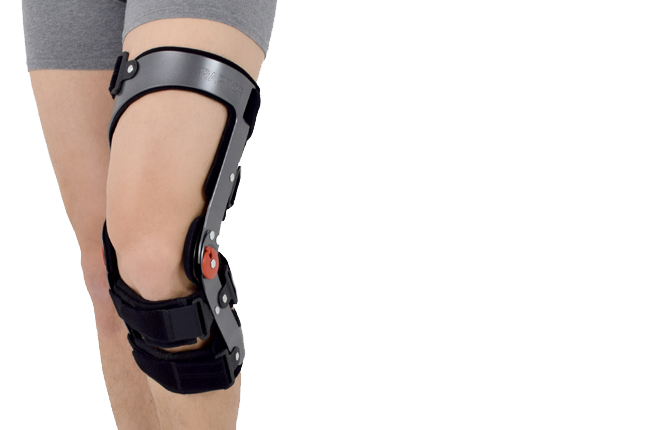

 Knee brace
 Class I medical device
 Durable
 Innovative
 Magnetic joint 1R orthodesign
 OA orthosis
 Perfect for skiers
 Recommended by specialists
 Waterproof
DYNAMIC UPRIGHT KNEE FRAME WITH ADJUSTMENT IN EVERY 15 DEGREE
Description
POSTERIOR CRUCIATE LIGAMENT INJURY (PCL)
Posterior Cruciate Ligament (PCL) is strong, elastic bands of tissue, connecting tibia and femur. It’s more stronger than anterior cruciate ligament (ACL). PCL prevents the femur from sliding off the anterior edge of the tibia and to prevent the tibia from displacing posterior to the femur. Together with ACL forms knee joint.
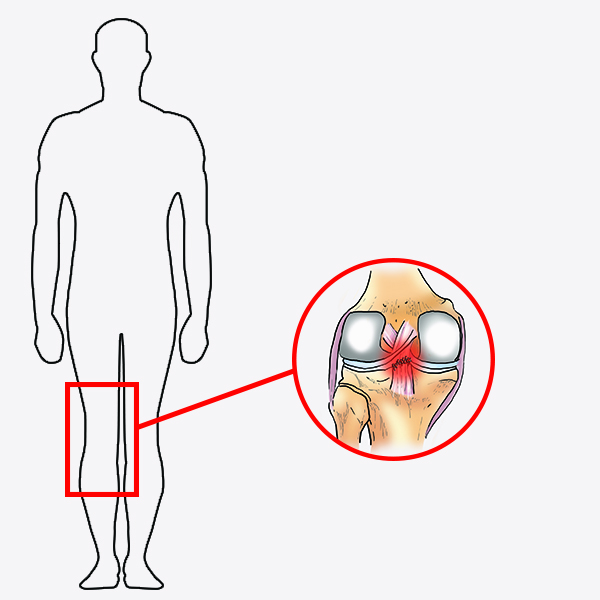
Cruciate ligaments of knee allow us to live in active way. They support such physical activities as: jumping, swimming or running. Unfortunately, together with surrounding soft tissues, they may be damaged easily during daily activities. Very often, together with PCL, other ligaments and meniscus are torn.
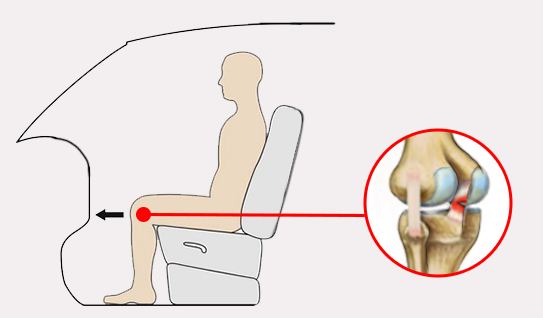
The posterior cruciate ligament (PCL) is susceptible to injury during hyperflexion, hyperextension and in a mechanism known as a dashboard injury. PCL lies deep within the knee joint and due to this fact, high forces may torn it such as car accidents, which are 50% of total amount of isolated injury to the PCL. In this injury the knee experiences impact in a posterior direction during knee flexion toward the space above the tibia.
Furthermore, PCL injury is common in many sport disciplines. During sports activities, the PCL also can tear when an athlete falls forward and lands hard on a bent knee, which is common in football, basketball, soccer and especially rugby. Every sudden motion of knee twisting or jumping can result in ligament injury.
If you suffer from PCL injury, you can have one from 3 types of sprains, classified according to a traditional grading system:
1. Grade I – only microscopic tears in the ligament,
2. Grade II (moderate) – the ligament is partially torn, and the knee is somewhat unstable,
3. Grade III (severe) – the ligament is either completely torn or is separated at its end from the bone that it normally anchors, and the knee is more unstable.
In mostly cases (grade II and III), the treatment of injured posterior cruciate ligament do not require surgery and full recovery is achieved with physiotherapy and joint stabilization. In case of grade III, the surgery is necessary.
No matter if treatment is conservative or not, the professional knee ligament brace is crucial! The brace will provide knee stability and protect the PCL against further injuries.
To do that, many doctors and experts highly recommend our lightweight functional knee brace RAPTOR/1R.
RAPTOR/1R is made of innovative fabric called Active3D™.
Product’s description
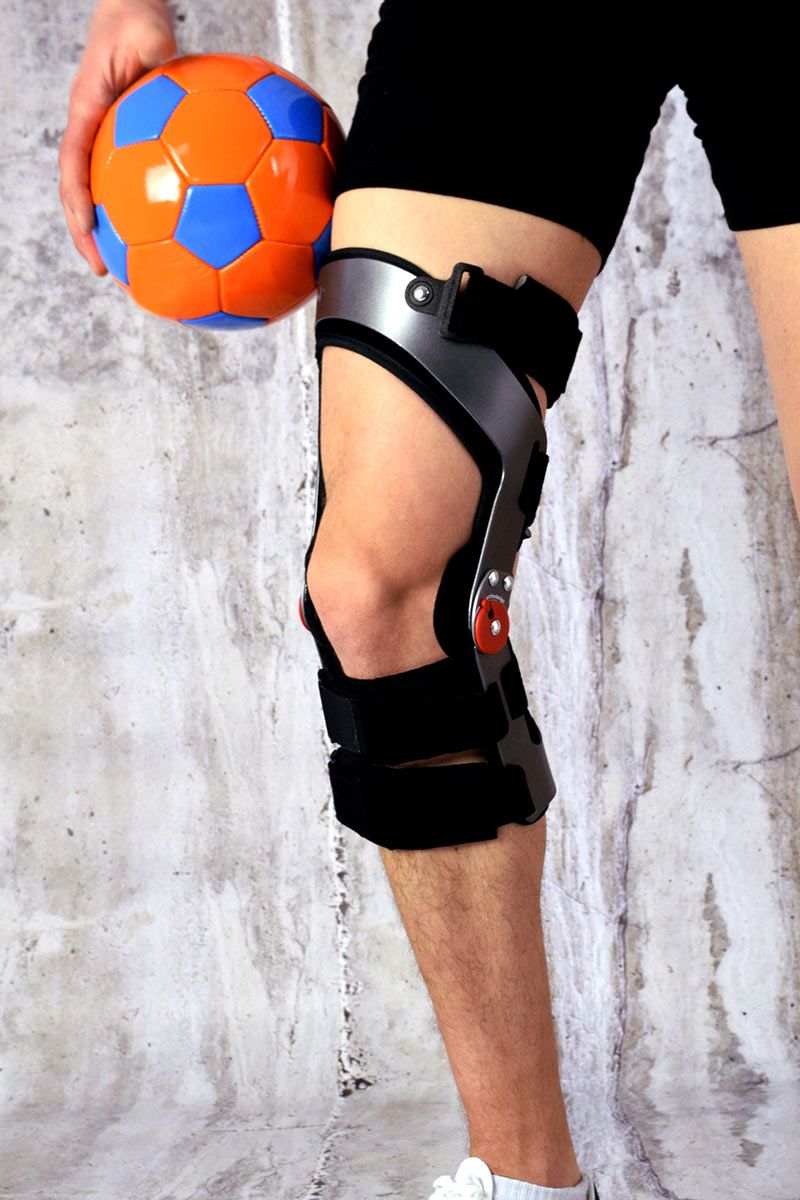
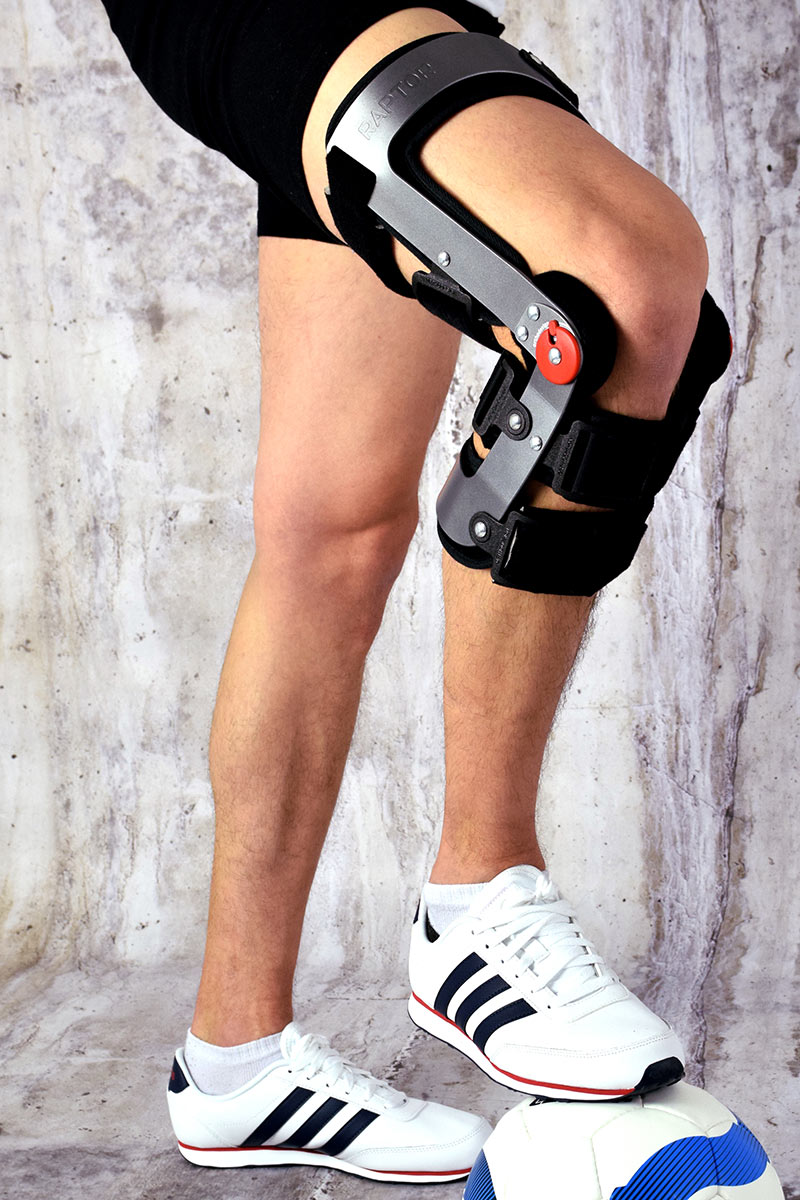
Functional knee ligament brace RAPTOR/1R is an excellent treatment option in case of PCL injury and protection. RAPTOR/1R knee brace is designed to resist varus and valgus forces applied to the knee and prevent against the posterior tibial translation (drawer syndrome).
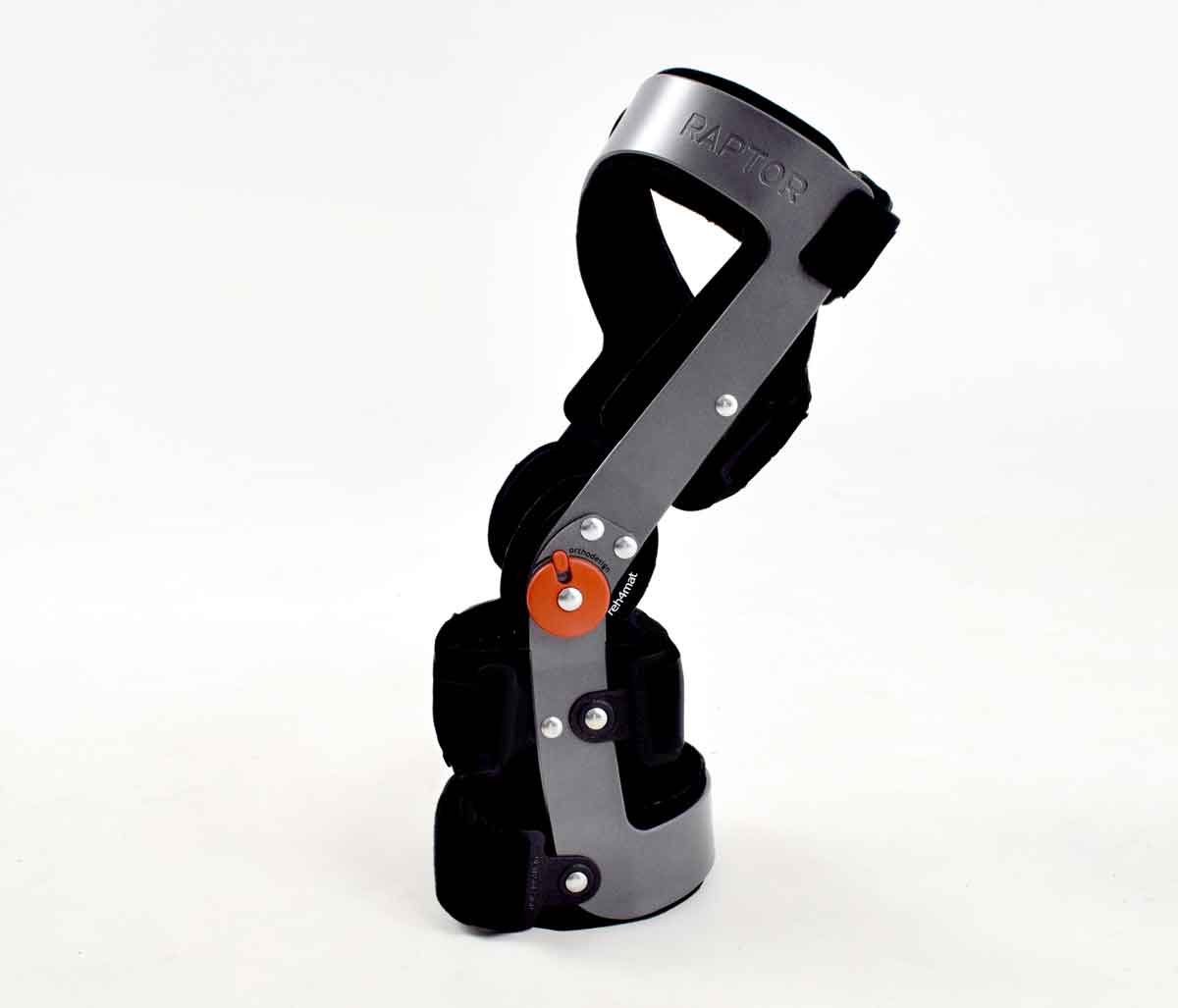
The knee brace is made of extremely strong and lightweight aluminium 6061 T6 frame, which is used in aeronautics guarantees the best stabilization in the market. Additionally, the frame was hot covered by powder dye so that it would be resistant to moisture. Thanks to that solution, the frame is fully indifferent to water as well as sweat.
The knee brace is equipped with 5 straps and special cushions that are additionally protection and minimize brace migration.
Internal soft lining of the frame is made of comfort EVA foam, covered cotton and terry layer what helps to avoid the skin allergy.

Our knee brace RAPTOR/1R was tested in brine and passed it with flying colors!
RAPTOR/1R is our waterproof guarantee!
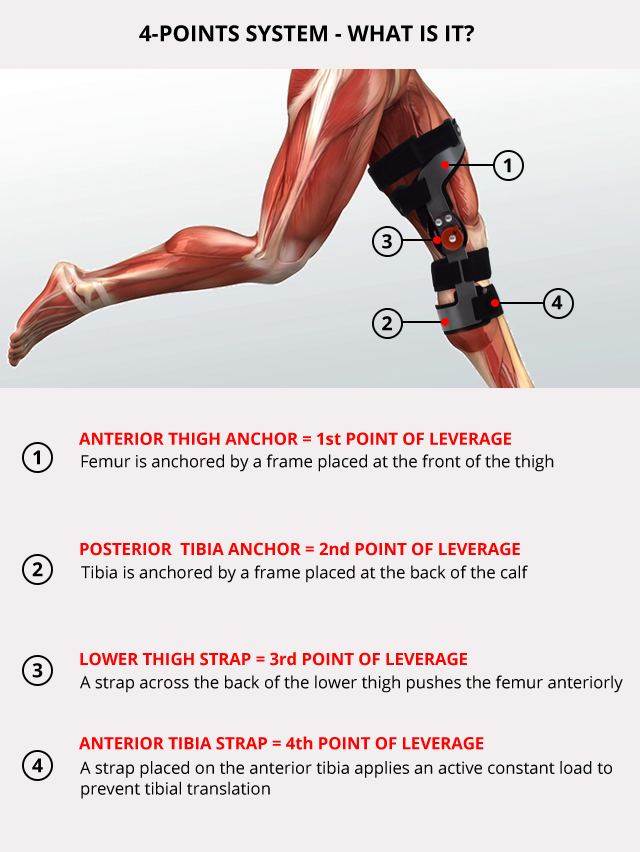
Functional knee brace RAPTOR/1R supports your knee in sagittal and frontal plane. The brace is equipped with 4-point dynamic leverage system that helps prevent further knee injuries.
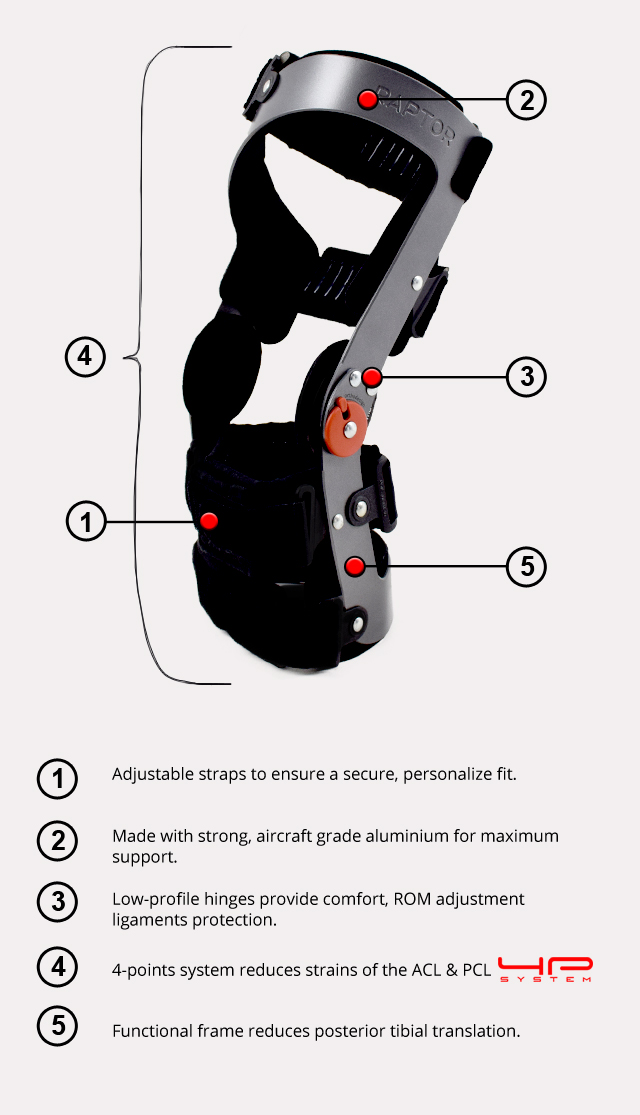
In case of posterior cruciate ligament (PCL) injury tibia goes backwards relative to femur. Front and rear construction of the frame allows to reduce posterior tibial translation (posterior drawer syndrome).
Due to lightweight aircraft aluminum you can use RAPTOR/1R knee brace everywhere you need:
 SPORT |  HOME |  WORK |  HOBBY |
Purpose of use
– PCL instability
– injured/strain PCL
– injured/strain ACL
– MCL/LCL/ACL instability
Sizes
| Size | (A) Thigh circumference 15 cm above the center of the patella | (B) Calf circumference 15 cm below the center of the patella | How to measure |
| S | 40 – 44 cm 15,7″ – 17,3″ | 30 – 34 cm 11,8″ – 13,4″ | 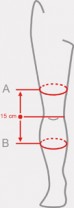 |
| M | 44 – 48 cm 17,3″ – 18,9″ | 34 – 38 cm 13,4″ – 15″ | |
| L | 48 – 52 cm 17,3″ – 20,1″ | 38 – 42 cm 15″ – 16,5″ | |
| XL | 52 – 56 cm 20,5″ – 22″ | 42 – 46 cm 16,5″ – 18,1″ |
Right and left leg specific.
Total length of the product:
S – XL: 40 cm
BRACE BAG INCLUDED
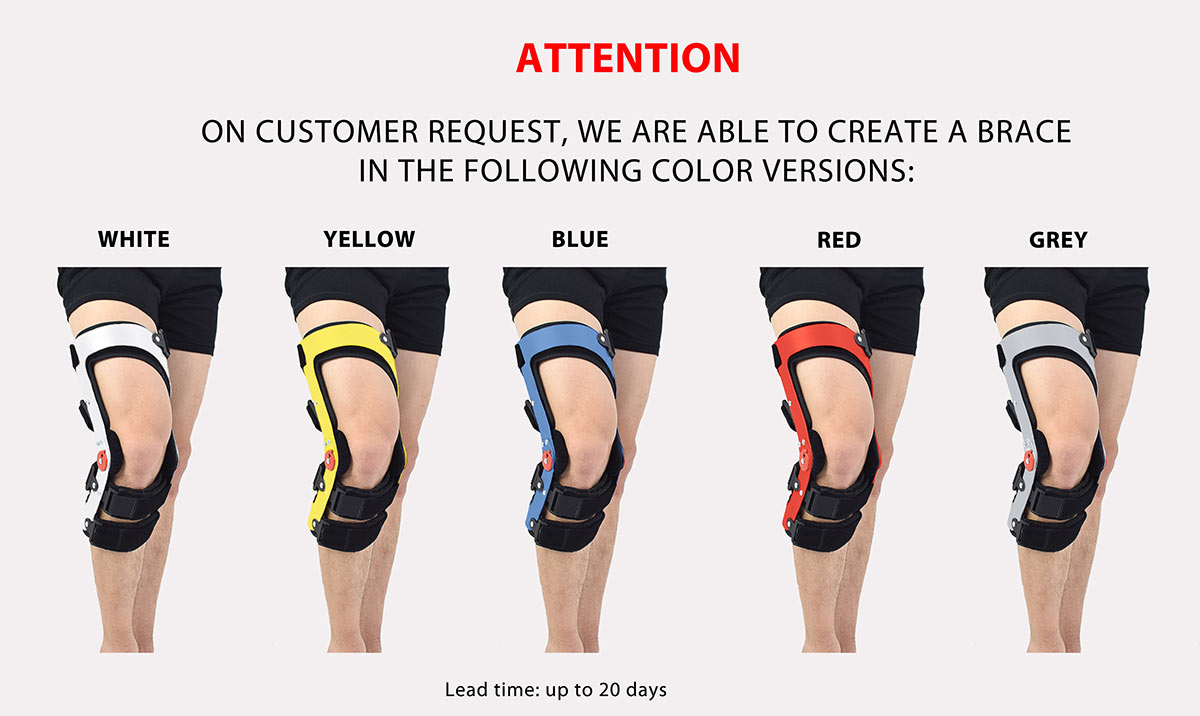
A brace made on customer’s request cannot be returned.
REPLACEMENT ITEMS
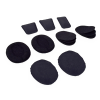
– a set of 3D covers
– a set of 3D covers and circumferential strips
Gallery
Click on the photo to enlarge
Technology
MATERIALS
Active3D™
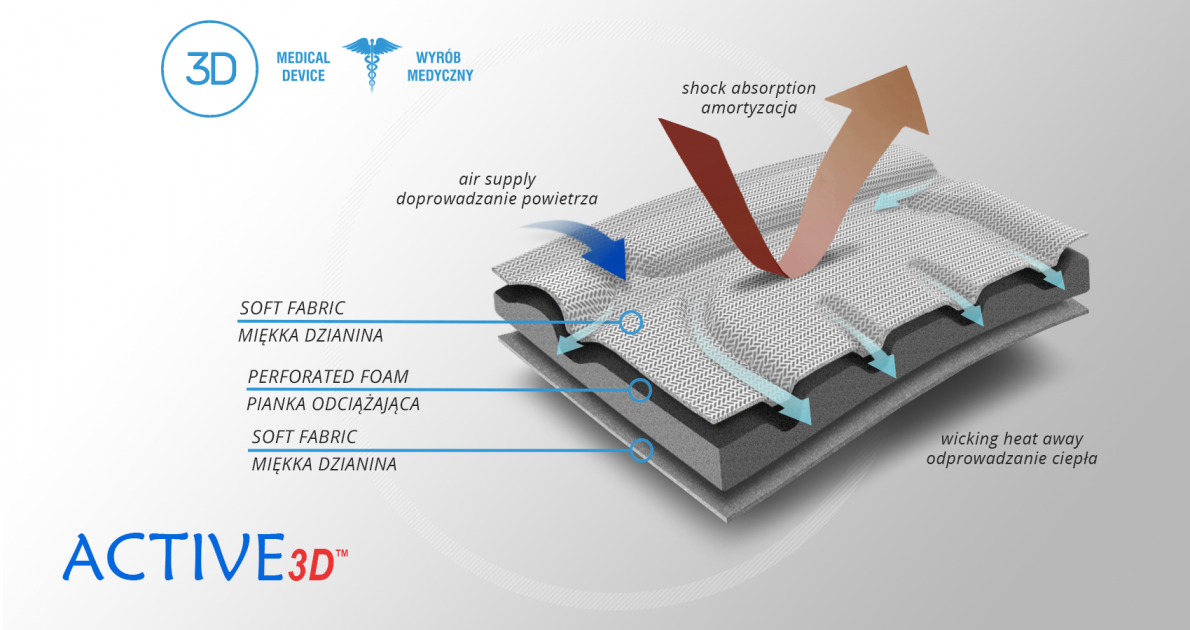
Active3D™ is thermoformed fabric made of special foamed, cell-closed designed material. It reduces the pressure on the body or any abrasions made by orthopaedic stays and aluminum splints. It is fully waterproof fabric and does not absorb sweat. It’s easy to clean. Due to its features, the fabric is an excellent product for making medical orthopaedic braces and orthoses. ACTIVE 3D™ has various external self-gripping layers. Our material has special, thermoformed properties and may be shaped according to the functional goals of the final braces.
STIFFENINGS
Splint 1R Orthodesign
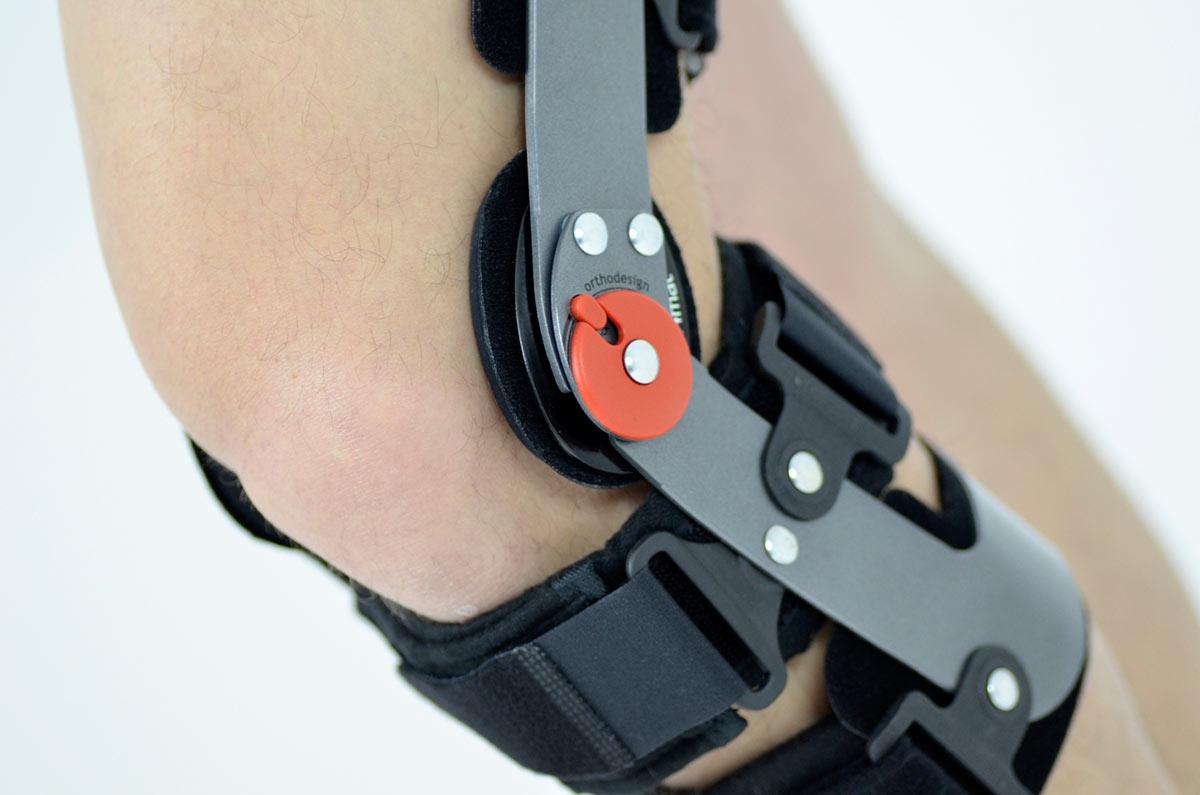
The 1R orthodesign orthopedic splint is a novel approach to the subject of orthopedic splints with flexion and extension angle adjustment. The innovativeness of the splint lies in the fact that in a hinge dial with a diameter not exceeding 30 mm, we have applied flexion and extension angle adjustment every 15 degrees. An additional advantage of the splint is that the adjustment is not done using Allen screws, as was the case in the previous generation of the splint, but by means of inserted steel pins, which, for convenience, are removed from the angle sockets using a magnet included with the splints. The icing on the cake is the locking ring, which, thanks to a ratchet system, will not allow the previously set angle to change spontaneously. In knee braces, the splints have a tibial offset, which allows for a more precise fit of the knee brace, and consequently, they more accurately execute the regulation of joint mobility, while in other products, the braces have a straight form. On the underside of the hinge dial, an oval element is mounted to which a gripper is glued, necessary for attaching soft 3D side pads to the dial. These splints, using an orthopedic wrench available in the Reh4Mat offer, can in some cases be individually adapted to the shape of the patient's limb by bending them slightly.Download the adjustment instructions for the 1R orthodesign splint
Setting up
Downloads
Accessories
ACCESSORIES / PRODUCTS TO BE USED WITH
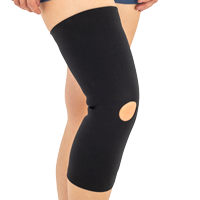
ON OUR WEBSITE WE PRESENT MEDICAL DEVICES.
USE THEM ACCORDING TO THE INSTRUCTIONS FOR USE OR LABEL.

 Class I medical device in accordance with Regulation (EU) 2017/745 of the European Parliament and of the Council of 5 April 2017. on medical devices.
MANUFACTURER / ADVERTISING ENTITY: REH4MAT Sp. z o.o.